


- Admin
- Oct 12, 2026
- articles
Complete Guide to Ecotourism in Iran: A Four-Season Travel Calendar to Unspoiled Destinations
Introduction
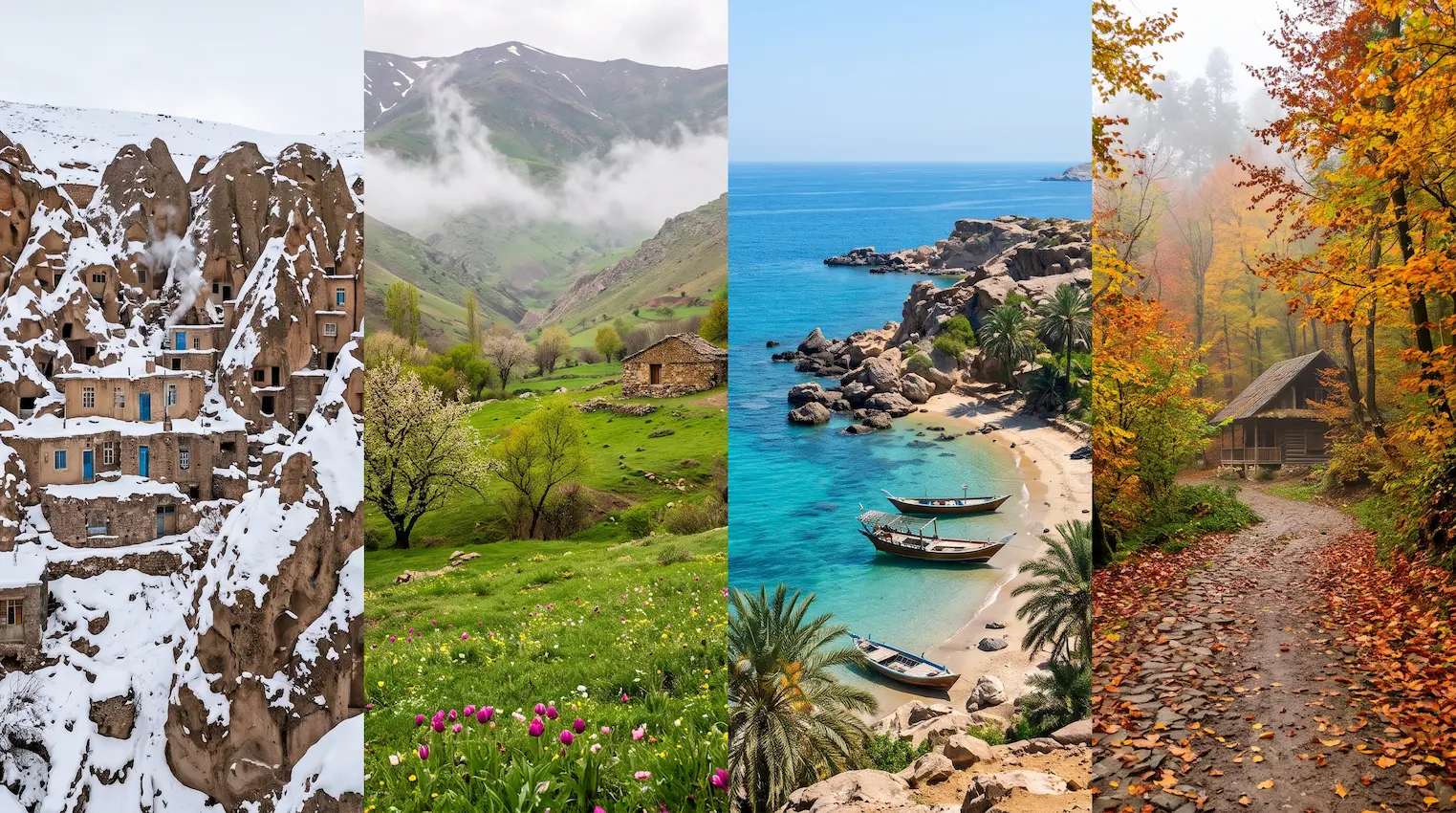
Imagine sitting on the wooden planks of a veranda in a snowy, rocky village, sipping hot mountain tea while a traditional heated platform keeps your feet warm. At that very moment, hundreds of kilometers away, another traveler is walking across the warm, silvery sands of the Persian Gulf in summer sandals, watching dolphins leap through turquoise waters. This is the enchanting character of a “four-season land”: a vast geographical region that offers an ideal destination and pleasant weather for travel on every one of the 365 days of the year.
However, for travelers who have traditionally preferred urban life and have little experience with local travel, entering the world of ecotourism can raise many questions. How can you enjoy a safe, warm trip in winter? Which mountainous areas offer relief from the summer heat? How are accommodation and sanitation facilities provided in traditional and rural homes, and what are the road conditions like? In this guide, we take an in-depth look at ecotourism in Iran across two contrasting yet enchanting climates: the snow-covered rocky village of Kandovan in Azerbaijan Province and the sunny, blue shores of Hengam Island in the south. We provide a practical, structured roadmap for experiencing Iran throughout all four seasons.
1. Kandovan Rock Village: Winter Stays in the Cone-Shaped Castles of Mount Sahand
1. Introducing the Region
Kandovan Village, located in Osku County in East Azerbaijan Province, is one of only three inhabited rock villages in the world. This ancient settlement was formed by ancient eruptions of Mount Sahand and thousands of years of natural wind and rain erosion. Its hand-carved “karan” dwellings, built into cone-shaped rock formations, are an extraordinary example of rural life in Iran and a remarkable ecotourism destination during cold, snowy seasons. The insulating properties of the rocks help keep the interiors of these homes warm and comfortable even in the depths of winter.
2. Geographical Features
Kandovan lies at an elevation of approximately 2,200 meters above sea level on the northern slopes of the Sahand mountain range. The region has a distinctly mountainous, cold climate, with heavy snowfall in autumn and winter and cool, pastoral highland weather in spring and summer.
3. Best Time to Visit
For travelers seeking snowy landscapes, winter silence, tea beside wood-burning stoves, and views of hanging icicles, December through February is a magical and ideal period. Those who prefer cool weather and green meadows will find late May through late September the best time to visit.
4. Access Routes and Facilities
- By air and rail: Take a direct flight or train to the major city of Tabriz.
- By road: Travel from Tabriz toward the new city of Sahand and then continue to Osku. From Osku, Kandovan is just 21 kilometers away along a paved mountain road with safe bends. The total distance from Tabriz is approximately 55 kilometers, or about one hour by road. The road has directional signs and is regularly salted and cleared of snow by road maintenance teams in winter.
5. Nearest Cities
Osku (20 kilometers), Sahand, Khosrowshah, and the major city of Tabriz (55 kilometers).
6. Accommodation Facilities
Kandovan is one of Iran’s most developed destinations for rock-based ecotourism accommodation. From the five-star international Laleh Kandovan Rocky Hotel to dozens of traditional ecotourism lodgings featuring suites carved into the rock, natural mineral-water jacuzzis, and cozy traditional heated platforms, visitors can experience rural tourism at a high standard.
7. Medical and Recreational Facilities
At the village entrance, visitors will find a roadside 115 emergency medical station, Red Crescent services, a health center, a multi-story parking facility, and handicraft shops. Imam Khomeini Hospital in Osku is approximately 20 minutes away.
8. Experiences with Local People
The warm-hearted, Turkish-speaking residents of Kandovan welcome visitors with traditional winter clothing, freshly baked hot fatir bread, doushab (grape molasses), walnuts, and natural honey from the Sahand mountains. Buying kilims, jajim woven textiles, and kalaghai scarves made using the batik printing technique offers a valuable souvenir from the region.
9. Regional Security
Thanks to the area's international tourism infrastructure and continuous monitoring by police patrols and road maintenance teams along the access routes, the region is considered highly secure and exceptionally peaceful, making it a reassuring destination for families.
10. What Types of Tourism Is It Suitable For?
- Winter ecotourism and experiencing life in hand-carved rock dwellings.
- Mineral-water bathing in Kandovan’s clear springs, described as beneficial for eliminating kidney stones.
- Photography of ancient architecture and anthropological documentation of mountain communities.
11. Suggested Two-Day Itinerary for Kandovan
- Day 1: Travel from Tabriz to Osku, visit kalaghai printing workshops, continue to Kandovan, check into a rock dwelling, drink saffron tea beside the traditional heated platform, and spend a snowy evening indoors.
- Day 2: Take a morning walk among the rocky karan dwellings, buy honey and medicinal herbs from the Sahand mountains, and visit the historic underground village of Hilehvar on the way back.
2. Hengam Island: Authentic Local Life and the Sunny Shores of the South
1. Introducing the Region
Hengam Island lies in the Persian Gulf, near the southern shores of Qeshm Island. While much of the country experiences snow and cold in autumn and winter, Hengam becomes a spring-like destination with brilliant sunshine, crystal-clear waters, shimmering silvery soil, and playful pods of dolphins. Ecotourism on this small island offers access to a peaceful world with few vehicles, the aroma of strong spices, and the gentle sound of sea waves.
2. Geographical Features
Hengam is an island of approximately 36 square kilometers, located two kilometers southeast of Qeshm. Its elevation ranges from sea level to around 100 meters on its central hills. It has a tropical maritime climate that transforms into a mild paradise during the second half of the year, with gentle breezes.
3. Best Time to Visit
Early November through mid-April is the most favorable period for visiting the island. During this season, temperatures range from 20 to 26 degrees Celsius, and opportunities for swimming, diving, and watching bottlenose dolphins during the calm morning hours are at their best.
4. Access Routes and Facilities
- By air: Take a direct flight to Qeshm International Airport, which is only 15 minutes from the harbor.
- By sea: Travel to Shib Deraz or Kandalo harbor on Qeshm Island and board a recreational speedboat. The sea journey to Hengam harbor takes only 10 minutes, and the boats are equipped with standard life jackets.
5. Nearest Cities
Suza, Qeshm, Dargahan, and Bandar Abbas.
6. Accommodation Facilities
In the village of Hengam-e Jadid (Mashi), dozens of traditional local houses built with stone and wood, coastal ecotourism lodgings, and attractive traditional palm-frond huts are available. Sleeping on wooden beds in courtyards beneath a star-filled sky, accompanied by the sound of water striking the rocks, captures the essence of staying in southern Iran.
7. Medical and Recreational Facilities
The island has a local health center and clinic, a passenger harbor, a coastal market, recreational three-wheeled motorcycles for touring the island, and local cafés and restaurants. Specialized medical facilities are available in Qeshm city.
8. Experiences with Local People
The warm-hearted, Baloch and Arabic-speaking women and men of Hengam create beautiful henna designs on visitors’ hands, using their distinctive Bandar dialect. Tasting hot shrimp samosas, ragag bread with soragh and mahiava sauces, and buying handmade jewelry made from seashells creates a meaningful connection with the local community.
9. Regional Security
Thanks to round-the-clock maritime patrol units, the disciplined organization of boat cooperatives, and the welcoming conduct of local residents, travel on the island is described as highly secure, with a prevailing sense of tranquility along its shores.
10. What Types of Tourism Is It Suitable For?
- Marine ecotourism, snorkeling, and wildlife watching, including Persian gazelles and hawksbill turtles.
- Relaxing ecotourism, stress relief, and coastal walks along red shores illuminated by phytoplankton.
- Food tourism and experiencing the preparation of freshly caught seafood.
11. Suggested Two-Day Itinerary for Hengam Island
- Day 1: Arrive by boat in the morning from Shib Deraz harbor, watch dolphins along the way, check into a coastal ecotourism lodge, enjoy a seafood lunch, explore the coastal market, and watch the reddish sunset at Khonizi Beach.
- Day 2: Take a morning walk along Silver Beach, observe Persian gazelles in the island’s natural environment, have henna applied, buy decorative seashells, and return to Qeshm in the afternoon.
Four-Season Travel Calendar for Iran: Where to Experience Ecotourism in Each Season
To help you decide where to pack your bags for each month of the year, the following guide makes planning your trip easier:
| Season | Recommended Climate | Notable Ecotourism Destinations | Highlighted Experiences |
|---|---|---|---|
| Spring (March to June) | Green plains, Zagros slopes, and summer pastures | Gilan, Lorestan, Turkmen Sahra, and Uramanat in Kurdistan | Upside-down tulips, rushing waterfalls, and spring tea |
| Summer (June to September) | Mountain valleys of the Alborz and Azerbaijan regions | Kandovan near Tabriz, Kelardasht, Alam-Kuh, and Mount Sabalan in Ardabil | Escaping the heat, mineral hot springs, and harvesting wild mountain fruit |
| Autumn (September to December) | Autumn forests and desert plains | Abr Forest, Naragh, the Lut and Maranjab deserts, and Meyami | Autumn foliage, stargazing, and evenings around a fire |
| Winter (December to March) | The Persian Gulf and Gulf of Oman coasts and islands | Hengam Island, Chabahar, Qeshm, Bushehr, and Hormuz | Spring-like weather, swimming in warm waters, and dolphin watching |
Principles and Etiquette for Responsible Ecotourism in Rural Communities
To enjoy an authentic trip while preserving cultural identity and the environment, follow these essential guidelines:
- Embrace the local way of life: An ecotourism lodge is not meant to replicate the amenities of a luxury city hotel. Its appeal lies in hand-stitched cushions, home-cooked meals prepared by local residents, and the simplicity of the surroundings.
- Respect local beliefs and clothing customs: Always ask permission before photographing village women, men, or children, and respect religious and ethnic traditions.
- Directly support local family economies: Avoid buying factory-made souvenirs in villages. Purchase fresh bread, local eggs, dried fruits and nuts, and handicrafts directly from local producers.
- Leave nothing behind but memories: Separating waste and taking plastic back to the nearest city for recycling is an ethical responsibility for every responsible nature traveler.
Conclusion
Traveling through ecotourism in Iran is more than moving from one place to another on a map. It is a return to the vitality, simplicity, and tranquility often lost in the noise of modern life. As this guide has shown, Iran’s remarkable climatic diversity makes it possible to find a suitable destination in every season without letting weather concerns prevent you from traveling. You can experience the snowy chill and warm traditional heated platforms inside Kandovan’s cone-shaped rooms in winter, or walk along sunlit sands, take boat rides beside dolphins, and enjoy fragrant spices on the warm shores of Hengam Island. There is no need to wait for a special holiday or springtime to travel; Iran’s landscape is alive and ready to explore on all 365 days of the year.
Close your eyes for a moment. Imagine the gentle sea breeze of the Persian Gulf moving your hair as the mild winter sun warms your cheeks. Or picture a cold mountain night, the sound of burning wood in a stone fireplace, and the aroma of locally baked bread filling your heart with warmth. This is the taste of authentic life, an experience you will not find anywhere else.
If you are eager to step away from everyday routines and begin your first ecotourism trip by staying in reputable traditional homes and traveling with experienced local guides, visit the ecotourism accommodation and four-season tour booking section of our website now, or leave a comment telling us which season you would like to travel and which part of Iran you would like to explore. Our tourism specialists are ready to create a safe, memorable, personalized itinerary tailored to your preferences. Pack your bags and take your first step today!
Share on