


- Admin
- Oct 12, 2026
- articles
Iran Ecotourism Guide: Multi-Climate Travel, Accommodation and Access
Introduction
Where on Earth can you begin your morning amid thick mist and the rain-soaked, 40-million-year-old Hyrcanian forests, spend the evening watching the wind dance across golden sand dunes in the endless silence of the desert, and welcome the sun the following day with a tropical breeze and turquoise waves washing against the shores of the Persian Gulf? Iran is a living museum of contrasting climates, a land where several seasons and geographical landscapes come together along a single journey within a relatively short period.
However, travelers who have so far preferred urban life and have little knowledge of ecotourism or local routes face several challenges: How can a multi-climate trip be planned without confusion? What are the road conditions and available amenities? What standards of hygiene and comfort can visitors expect in traditional homes? In this guide, we examine three distinct climates in Iran—the forest climate of Gilan (Balabaraz Village), the desert climate of the Lut Desert (Shafiabad Village), and the coastal climate of the Persian Gulf (Taban Port in Parsian)—and provide a step-by-step roadmap for an immersive experience of ecotourism in Iran, helping you enjoy a peaceful, safe, and memorable journey.
1. Balabaraz Forest Village, Fuman: Breathing in the Hyrcanian Mist
1.1. Overview of the Region
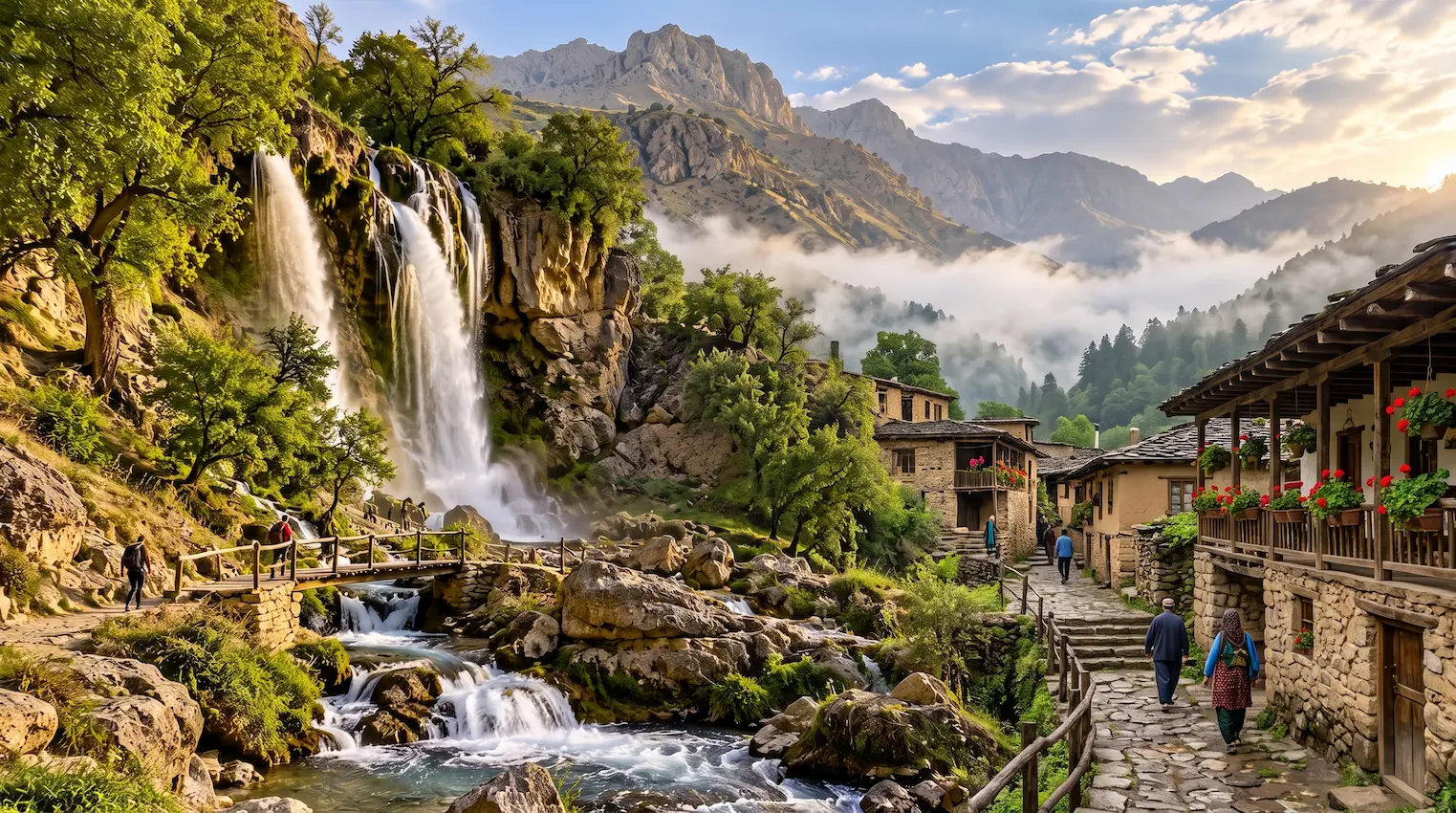
Balabaraz Village and the summer settlements surrounding Masuleh, in Fuman County, Gilan Province, represent the unspoiled natural beauty of the western Alborz Mountains and the rainforests of northern Iran. Wooden houses with traditional telar verandas, towering alder and maple trees, and mist-covered valleys filled with flowing water create a welcoming refuge for experiencing rural life in Iran and escaping the stresses of urban living.
1.2. Geographical Characteristics
The area lies at an elevation of approximately 600 to 1,100 meters above sea level. Its climate is moderately humid and semi-mountainous. Dense Hyrcanian vegetation and mild humidity create a cool, evergreen ecosystem.
1.3. Best Time to Visit
May and June, when forest flowers bloom and the air carries the scent of rain-soaked soil, as well as October and November, when the landscape celebrates autumn with shades of yellow, orange, and red, are the ideal times to visit.
1.4. Access Routes and Facilities
The access route follows the Qazvin–Rasht Expressway and then the road from Fuman toward Qaleh Rudkhan and Masuleh. The main routes are described as standard, high-quality paved roads, while only the short access roads leading to accommodation facilities are compacted dirt roads suitable for all vehicles.
1.5. Nearest Cities
Fuman, Shaft, Maklavan, and the major city of Rasht, approximately 50 kilometers away.
1.6. Accommodation Options
Balabaraz offers dozens of ecotourism lodges featuring traditional local architecture made of mud and wood, balconies overlooking rice fields and forests, and clean suites equipped with modern heating and cooling systems. These facilities provide excellent conditions for rural tourism stays.
1.7. Medical and Recreational Facilities
Well-equipped hospitals, 24-hour pharmacies, emergency centers, and gas stations are available in Fuman and Shaft. Local health centers also provide basic primary healthcare services.
1.8. Experiences with Local People
The Gilak people of the region demonstrate their renowned hospitality through colorful spreads featuring baghala ghatogh, mirza ghasemi, freshly baked traditional Fuman cookies, spring tea from Lahijan, and zeytoon parvardeh, a traditional olive appetizer.
1.9. Safety Conditions
Thanks to the peaceful rural setting and the regular presence of road maintenance and law enforcement patrols along connecting routes, road travel and accommodation in the area are described as having a very high and stable level of safety.
1.10. Suitable Types of Tourism
- Ecotourism, gentle forest hiking, and breathing in clean mountain air
- Landscape and green rice-field photography
- Relaxing family ecotourism and leisure stays
1.11. Suggested Two-Day Itinerary for the Forests of Gilan
- Day 1: Arrive in Fuman, sample traditional cookies, travel toward Balabaraz, check into a wooden ecotourism lodge, enjoy an evening walk along the rice fields, and have a local dinner featuring torshe tareh, a traditional sour herb stew.
- Day 2: Take a half-day excursion to the ancient fortress of Qaleh Rudkhan or the stepped bazaar of Masuleh, purchase souvenirs such as tea and traditional chador shab weaving, and prepare to travel toward central Iran.
2. Shafiabad Village in the Lut Desert: The Grandeur of Silence and Golden Palm Trees
2.1. Overview of the Region
After the cloudy air of northern Iran, the desert climate emerges with its profound silence and seemingly endless expanses of sand. Shafiabad Village, in the Shahdad district of Kerman Province, serves as a gateway to the UNESCO World Heritage-listed Lut Desert and its legendary kaluts, or wind-sculpted landforms. A historic fortress with earthen towers and ramparts, clear qanat channels, and groves of palm and citrus trees amid the desert heat create a remarkable and distinctive contrast.
2.2. Geographical Characteristics
Shafiabad lies at an elevation of approximately 300 meters above sea level, on the edge of the Lut Depression. Its climate is hot and arid. At night, the lack of humidity allows the sky to become exceptionally clear and filled with stars.
2.3. Best Time to Visit
Early November through late March is the best period to visit, offering moderately warm sunny days with gentle breezes and cool nights ideal for stargazing.
2.4. Access Routes and Facilities
The Kerman–Sirch–Shahdad highway, followed by the road to Shafiabad, is described as a high-quality, fully paved, dual-carriageway route. It passes through the cool mountain tunnels of Sirch before entering the desert plain.
2.5. Nearest Cities
Shahdad, 15 kilometers away, Sirch, Anduhjerd, and the major city of Kerman, 95 kilometers away.
2.6. Accommodation Options
Shafiabad is presented as a successful example of ecotourism in Iran. A restored caravanserai and traditional lodgings with earthen rooms, stylish palm-grove kapar shelters, woven reed wall decorations, and charming traditional courtyards create an unforgettable stay.
2.7. Medical and Recreational Facilities
Shahdad has a roadside 115 emergency medical service station, a round-the-clock comprehensive health center, a pharmacy, and a gas station. A Red Crescent desert rescue station is also located along the road to the kaluts.
2.8. Experiences with Local People
Friendly desert residents welcome visitors with fresh kalut dates, traditional kolompeh pastries, herbal infusions made from desert plants, and motanjeneh stew. Sitting beside a traditional charcoal brazier and listening to stories about desert life is another delightful part of the experience.
2.9. Safety Conditions
With the management of the Lut Desert World Heritage Site and regular law enforcement checks, the area is described as having exemplary safety conditions and being well suited to both solo and family travel.
2.10. Suitable Types of Tourism
- Astronomy, Milky Way observation, and night photography
- Geotourism and exploration of eroded kalut valleys
- Quiet retreats, meditation, and experiencing the simplicity of desert life
2.11. Suggested Two-Day Itinerary for the Lut Desert
- Day 1: Travel from Kerman toward Shahdad, check into an ecotourism lodge in Shafiabad, head to the kaluts at 4 p.m. to watch the reddish sunset, and spend the evening around a campfire beneath the star-filled sky.
- Day 2: Watch the sunrise from atop the nebkhas, natural sand formations resembling mounds or pots, visit Shahdad's historic water reservoir, and purchase cumin and dates as souvenirs.
3. Taban Port and the Shores of Parsian: Deep Blue Waters and the Rocky Splendor of the Persian Gulf
3.1. Overview of the Region
Continuing this multi-climate journey, we reach the coastal belt of the Persian Gulf, where warm, clear seawater meets sculpted rock faces. The fishing port of Taban, in Parsian County, Hormozgan Province, near the border with Bushehr Province, is presented as one of the lesser-known marine ecotourism destinations. Its golden sandy shores, natural sea caves, and calm waters create an ideal setting for relaxation and ecotourism.
3.2. Geographical Characteristics
Taban Port lies between sea level and approximately 40 meters above sea level along the northern coast of the Persian Gulf. It has a tropical coastal climate that becomes pleasant during the second half of the year, with reduced humidity and temperatures of 20 to 25 degrees Celsius.
3.3. Best Time to Visit
December, January, February, and March are the prime months for visiting the southern coasts. The sea remains warm enough for winter swimming, while the weather resembles that of northern Iran in May.
3.4. Access Routes and Facilities
- By air: Fly to Asaluyeh Airport. The drive from there to Parsian takes approximately 45 minutes along a paved highway.
- By road: Follow the Bushehr–Kangan–Asaluyeh highway toward Parsian and Kushknar Port. The road is paved, relatively level, and equipped with standard lighting.
3.5. Nearest Cities
Kushknar, Parsian, Asaluyeh, and Bandar Maqam.
3.6. Accommodation Options
Coastal villages such as Taban, Bastanu, and Ziarat offer various seaside ecotourism lodges featuring traditional southern architecture, white walls, and beds facing the sea horizon. They provide an alternative to the crowds often associated with conventional hotels.
3.7. Medical and Recreational Facilities
Rostamani Hospital in Parsian, the Kushknar clinic, pharmacies, gas stations, and well-equipped fishing ports are located a short distance from the villages.
3.8. Experiences with Local People
The hospitality of southern Iran's indigenous communities, the taste of freshly grilled kingfish over charcoal, spicy shrimp do-piazeh, local tomoshi bread with egg and cheese, and conversations with traditional dhow sailors create a distinctive emotional connection that stays with travelers.
3.9. Safety Conditions
Owing to the hospitality of local communities and the regular presence of maritime border patrols and traffic police, this coastal area is described as offering a high level of safety and peace of mind for travelers.
3.10. Suitable Types of Tourism
- Coastal tourism, swimming, snorkeling, and traditional boating
- Geotourism and visits to Challeh Boch ir and the remarkable Lovers' Pass
- Shopping for local palm-leaf weaving and decorative seashell crafts
3.11. Suggested Two-Day Itinerary for the Shores of Parsian
- Day 1: Arrive in Parsian via Asaluyeh, settle into a coastal lodge in Taban, take a boat trip across the calm gulf waters, watch the sunset from the rocky Lovers' Pass, and enjoy a seafood dinner.
- Day 2: Explore Cheshmeh Boch ir Gorge or the rocky beach of Dastir, purchase khasui dates and authentic southern spices, and bring the journey to a memorable close.
Comparative Table for a Multi-Climate Trip Across Iran
Use the following table to compare the three destinations when planning a single journey:
| Climate Destination | Geographical Setting | Average Winter Temperature | Distinctive Accommodation Feature | Signature Local Food |
|---|---|---|---|---|
| Balabaraz, Fuman | Hyrcanian forests of the Alborz Mountains | 5 to 10 degrees Celsius | Wooden cottages with telar verandas | Baqala ghatogh and torshe tareh |
| Shafiabad, Lut Desert | Desert and arid kalut formations | 15 to 18 degrees Celsius | Earthen rooms with palm-filled courtyards | Dates, qurut, and motanjeneh stew |
| Taban Port, Parsian | Rocky coastline of the Persian Gulf | 22 to 26 degrees Celsius | Coastal ecotourism lodges with traditional kapar-style structures | Grilled fish and tomoshi bread |
Practical Checklist for a Multi-Climate Road Trip in Iran
To enjoy a smooth and well-organized journey across different climates, follow these practical guidelines:
- Layered clothing: Since temperatures vary significantly between the cool northern forests, the desert, and the southern coasts, bring lightweight clothing for warm conditions as well as a warm, wind-resistant jacket.
- Plan driving distances: Check travel times between Iranian cities using online maps before departure, and include two-hour breaks at roadside service complexes in your itinerary.
- Respect rural communities: Value local food traditions, traditional clothing, and rural customs as an important cultural heritage. Support the local economy by purchasing products directly from their producers.
- Book traditional accommodation in advance: Because selected ecotourism lodges have limited room capacity, confirm your reservations several days before departure.
Conclusion
Traveling across the vast landscapes of ecotourism in Iran is more than an ordinary holiday. It is an immersive passage through biodiversity, climatic diversity, and cultural variety rarely found in a single destination elsewhere in the world. This roadmap shows that exploring the country in depth does not have to be confusing: routes are accessible, roads are safe, and recreational and medical facilities are available along the main corridors. Within a relatively short period, you can connect the freshness of rain in the northern forests with the extraordinary silence of the Lut Desert and the warmth of the sun on the Persian Gulf coast, experiencing the remarkable hospitality of local communities at every step.
Close your eyes for a moment. Imagine the cool dew of Fuman's forests still resting on your skin as the warmth of Shafiabad's palm groves surrounds you. A few hours later, you are listening to the gentle melody of turquoise waves in the enchanting darkness of Taban's shore, with the aroma of spices and grilled fish drifting through the air. This extraordinary harmony is one of the precious gifts that traveling through Iran can offer.
If you are ready to escape everyday routines and begin this remarkable multi-climate journey with stays at outstanding ecotourism lodges and the guidance of experienced local tour leaders, visit the tour-guiding services, specialized travel consultation, and online ecotourism reservation sections of our website now, or share your dream destination with us in the comments section. Our tourism experts are ready to help you design a personalized, safe, and memorable itinerary suited to your schedule and budget. Pack your bags and begin this exceptional adventure today!
Share on